

Strong Beginnings: Strategies to Enhance Engagement, Create Context, and Set a Positive Tone in Group Experiences
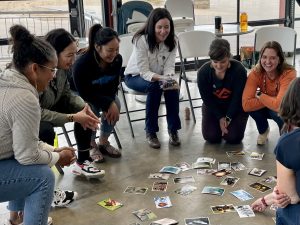 Creating an inclusive and well-designed welcoming reflection activity (sometimes called a warm welcome, first five, or hook activity) to start a session enhances engagement, and creates an opportunity for participants to make positive connections with their colleagues and the upcoming meeting, training, or experience.
Planting Seeds for Engagement
Choice-centered welcoming reflections empower participants to start the session as the partner in the experience by choosing something relevant to them and highlighting their own voice and opinions. This not only starts to shift responsibility for the experience to ownership by the whole group. It also helps participants begin to become fully present in the experience and let go of the outside stressors or distractions.
Starting with a relaxed reflective welcoming, allows for a slow but intentional start to the session. On a practical note, engaging a group in a welcoming activity allows the facilitator to relax and greet people casually or, if necessary, make last minute preparation adjustments or take attendance while the group is engaged in something self-directed and meaningful. It also allows folks who come in late to not feel rushed as they can easily slip into the activity.
 Hooks to Engage and Welcoming Rituals
The first few minutes of an experience are a key time to hook and engage learners, create context for learning, and set a positive and welcoming tone. Metaphoric objects, quotes, and other tangible objects can hook a group’s attention and spark reflection in a low-stakes but meaningful way when chosen intentionally to target your program’s purpose for gathering.
A novel activity immediately engages participants, drawing them into a positive experience and creating buy-in. Participants come to the meeting/training with things on their minds: a stressful commute, a rough morning at home, a challenging social interaction in the hallway before the meeting, or the deadline they are trying to meet. A reflective, focusing activity can help participants transition into the workshop/meeting space and shift their focus to the present and the experience at hand.
Research on learning and retention shows that people remember most about the first few minutes of an experience and, secondly, the last few minutes of experience (Willis, 2014). Cognitive neuroscientists call this the primacy-recency effect. John Medina, author of Brain Rules, states: “If you are trying to get information across to someone, your ability to create a compelling introduction may be the most important single factor in the later success of your mission” (2008, p. 116). This research validates the importance of welcoming participants with an engaging opening activity and providing a meaningful reflection prompt to tie it all together or “bookend” a learning experience. I like the language around this practice that I’ve seen promoted by leaders in Social and Emotional Learning who use the terms “welcoming ritual” and “optimistic ending” to describe this practice of intentionally infusing welcoming and closing rituals into group sessions.
 Start Small for a Bigger Impact
Effective facilitators carefully sequence their programs so that activities build upon the previous ones. They start with less intimidating methods to build comfort, trust, and rapport in the group before increasing the challenge. By starting with simpler activities that aren’t performance-oriented, group members start to share and engage at their own pace and become more willing to push their comfort zones later on when it really matters.
I like to put the same thought and planning into sequencing the reflective part of the experience. For example, rather than opening a program with a whole circle introduction, I always begin rapport building and reflective dialogue with a partner or small group sharing activities and blend in simple, non-threatening — but relevant, context-setting — questions or an object, image or quote to use as a talking point. This allows participants to warm up by interacting with just one or two others at a time before sharing with the larger group. This incremental building of connections, one or two people at a time, rather than beginning as a whole group “sharing circle,” helps learners build comfort with each other and the group process, and honors the introverts, leading to more engagement, buy-in, and in-depth reflection discussions later on. To better meet the needs of all participants, I encourage you to reflect upon and possibly rethink the default settings and structures often used in facilitation and teaching.
My favorite rapport builders, “Handshake Mingle” “Concentric Circles” Trade and Share, and Commonalities Mingle, are interactive ways to engage groups in community building, connection, reflection, and dialogue, or content exploration, review or reflection. I have written many articles with variations of these approaches in this blog and my books.
Commonalities Mingle
Commonalities Mingle is an engaging activity for building rapport in groups of all kinds. It is also a useful method to collectively reflect on group norms, and group goals. It can be an engaging way to review and reflect upon training material while at the same time learning about peers or colleagues and exploring common and differing perspectives on a topic.
For team-building and networking programs, it can facilitate the understanding of “who is in the room” and help participants make connections and start a dialogue about reflection topics. Check out this post with more details: Commonalities Mingle Activity for Rapport Building, Reflection, Positive Group Norms and Academic Review/Discussion.
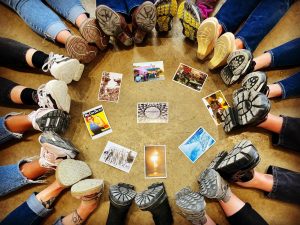 Harness the Power of Metaphoric Reflection
Symbols, images, and objects help people communicate their thoughts and create meaning from experiences. They spark emotions and help people understand and communicate abstract concepts that cannot always be translated into words. Of all the methods in my group facilitation and teaching toolbox, my collections of metaphoric images and objects are the most powerful tools for igniting meaningful reflection for individuals and groups. Reflection sparked by using image cards, pictures, artwork, and tangible objects has a richness, depth, substance, and level of participation that verbal-only techniques rarely bring about. They spark emotions and help people understand and communicate abstract concepts that are difficult to translate into words.
Interesting objects and images capture participants’ attention, arouse emotion, and draw them into an experience or reflective discussion. People often engage more readily and share more deeply when they have a visual or tactile symbol representing their thoughts and feelings. Brain research suggests this might be because using metaphors and symbols in conversation stimulates multiple brain areas involved in other senses.
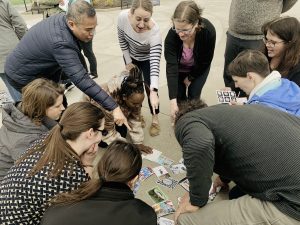 Postcards, Images, and Object “Hooks”
My favorite methods for engaging and welcoming participants from the moment they walk in the door involve the use of object or image based reflection prompts such as postcards, found images, paint chips, computer keyboard keys, Miniature Metaphors, tools, and other found objects, natural objects, animal figurines or pictures, and household items. People are drawn in by colorful, novel, or intriguing imagery and objects. They often share more readily when they can attach their thoughts and feelings to an item that can be touched and shown to a group during discussion.
Visit these links to read more about using postcards, images, and objects as a welcoming strategy, including some prompt examples. Read more: “Welcoming Activities for Meaningful Engagement, Community Building, and Reflection”
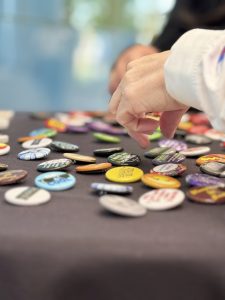 Quotes, Pin-Back Buttons, and Compelling Questions
Quotes: Opening a session by offering a variety of quotes with a context or theme related to your group goal is a powerful way to engage, create context and “frame” or “anchor” an upcoming experience by creating relevancy and emotional connection to the content. Quotes are an engaging transitional, introductory, or reflective activity and a compelling way to explore a subject or discussion topic. Discussing quotes can help group members connect with each other or spark creative thought around a subject. To read more examples of the use of quotes, check out this post from the blog archives. For quotes centered around the theme of experiential learning and change, see my Quotables collection. Or make your own set of quotes based on the theme or topic you are exploring.
Simply posing a brain teaser, word puzzle, or reflective prompt to think or talk about as participants enter can be an easy-to-plan welcoming/focus strategy. Tools like Table Topics and Chat Pack cards are valuable resources for these question prompts and can be found at your local independent bookstore. When using question prompts, I infuse choice into the activity by displaying an assortment of questions and inviting participants to choose a question they would like to chat about with a partner rather than handing questions out or having them blindly receive a question.
 Conversation Starter Buttons or Paint Chips
Conversation-Starter Buttons or paint chips/samples are a fun and easy way to transition into a workshop space. They are a perennial favorite in my professional development and adult learning programs, and I regularly use them to check progress around group projects. This is also a tried-and-true activity for engaging leaders in laughter and dialogue during a professional development session. The buttons bring humor into group settings where individuals are reluctant to participate, helping them buy into the group process. If you don’t have access to the buttons, paint chips can be used similarly. I choose paint samples from my local hardware store based on the paint name as well as color.
Pair Share/Groupings Activities
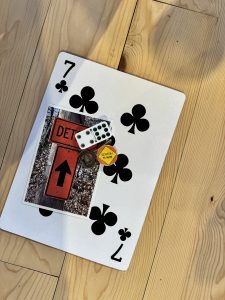
Objects like dominoes, match game cards, and playing cards can draw participants into an experience. Using a prop-based activity to help participants first find partners or small groups for partner activities and sharing is engaging and facilitates a sense of comfort, choice, and control within these initial warm-up activities. People have something physical that they can use as a tool for connection. I always allow for choice in interpreting what matching means, so there will be options for finding a partner based on each person’s comfort level.
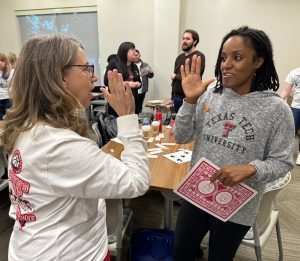 It also models from the beginning that there will be many answers, possibilities, and options in the upcoming group experience and that the group are partners in facilitating, teaching, and learning. Check out these articles for more examples of online and in person “smaller circles” and “partner dialogue” strategies, including some no-prop options: Setting the Tone: Creating a Positive Environment for Learning, Object and No Prop Pair Share Activities to Set the Tone, Build Community, and Initiate Reflective Discussions, and “Keys” to Community, Group Success, and More: A Multi-Purpose, Upcycled Tool for Reflection.
A welcoming ritual photo/prompt, whiteboard, and choice-centered breakout rooms are ways to facilitate this online. See this article for more Choice-Centered Breakout Rooms to Increase Engagement and Ownership of Learning.
Integrate Art and Creative Expression in Reflection
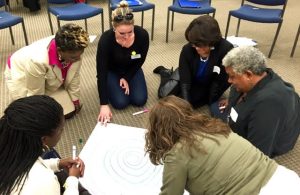 There is great power when learners create symbols, music, words, or performance to represent feelings and experiences. The very essence of art is expressing oneself. Throughout history, humans have used artistic expression to explore, understand, and share ideas and experiences.
Involvement in individual/group art activities can be a rich, reflective process for participants. Creating one’s own symbol of experience and/or collaborating on creating a group symbol can add depth and breadth to the initial experience and provide a powerful, tangible reminder of the learning. When a symbol is used or created for reflection, it leaves the opportunities for meaningful interpretation of an experience wide open, enhancing emotional connection, retention, and application to real life.
My favorite collaborative artistic methods that are engaging warm-up, entry or ongoing reflection activities include Group Drawing/Sculpture and Graffiti Wall.
Online variations can be found in these articles: Graffiti Wall for Active and Engaging Reflection Online or In-Person and Group Drawing: A Favorite Collaborative Reflection Activity for Online or In-Person Experiences.
 A Note on Names
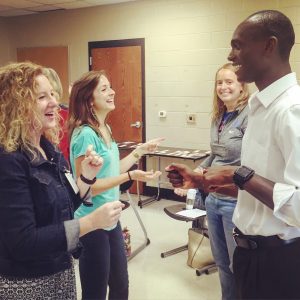
A key ingredient for creating a positive and productive environment for learning is to help participants and leaders know and use each other’s names correctly from the very beginning of the program. Dr. Angela M. Ward is a thought leader I admire in the education world who offers transformative resources for promoting equity in education. She emphasizes how important it is for leaders to make the effort to learn and correctly pronounce the names of the participants because of the powerful role they play in the positive identity development of each person in their care. Even in the small schools and organizations that I encounter in rural areas — where facilitators and leaders might assume group members already know each others’ names — many actually don’t or are not always using and honoring names in a respectful way. I have found the same to be true with adults in the workplace.
Given names represent choices, thoughts, and feelings on the part of the individual’s family members. Preferred nicknames or new or shortened names chosen by the individual represent a personal sense of self, choice, control, and ownership. Honoring this sense of identity and choice promotes dignity, respect, and positive group culture. Carefully curated and facilitated activities help groups of all ages practice names and explore the concepts of connecting with others, honoring their peer’s strengths and personalities, and showing respect for individualism, identity, and choice. The following are a few of my tried and true activities to help groups learn, practice, and reinforce names in a meaningful but playful, non-threatening, and palatable way. Check out this post for more on “Name Meanings” and a few thoughtfully sequenced name activities.
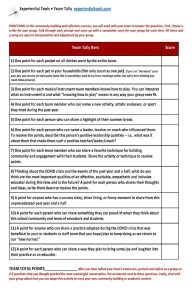 Team Tally is my go-to community building, reflection, and review activity for groups in various settings, situations, and sizes online and in person. Team Tally is a powerful reflection and relationship-building activity because it blends the right amount of healthy competition to draw participants in, and if thoughtfully designed, carefully sequenced questions will keep them sharing in a non-threatening, collaborative atmosphere.
A thoughtful facilitator can create context and blend in targeted review, reflection, and data-gathering questions around specific content, themes, or topics. Because it is participant-directed, it is ideal for transitional times, i.e., when returning from a break or mealtimes. It is also useful when an unexpected change in a schedule occurs, and you need a self-directed activity to engage the group in while you adjust materials or set up. You can adapt the questions to fit the group and situation and always infuse opportunities for choice and ownership by weaving in flexibility as to how the questions are worded.
Competition initially draws the group in, but it’s the choice-centered group sharing, collaboration, and relationship building that keeps them engaged. It works beautifully in online programming with breakout rooms and Jamboard. Check out this article “The Most Versatile Activity in My Toolbox: Team Tally (In-Person or Online)” [Email me at jen@experientialtools.com for example templates you can adapt to your own groups]
Repurpose “Rapport Builders” and Games for Reflection and Content Review
Over the years, I have repurposed the community-building and “ice-breaking” (I like the terms “rapport building” or “community builders”) activities I traditionally use at the start of a program as active reflection techniques facilitated throughout a workshop or meeting. My favorite rapport builders — Handshake Mingle, Concentric Circles, Trade and Share, and Commonalities Mingle — engage groups in active reflection and dialogue for meetings and training content exploration. I bet if you think about it, your favorite activities for building community and rapport to warm up a group can also be repurposed with reflection in mind.
References:
Medina, John. (2008, 2014). Brain Rules: 12 Principles for Surviving and Thriving at Work, Home and School. Seattle, WA: Pear Press.
Stanchfield, Jennifer (2014). Inspired Educator, Inspired Learner: Experiential, Brain-Based Activities and Strategies to Engage, Motivate, Build Community and Create Lasting Lessons. Bethany, Ok: Wood N Barnes Publishing
Stanchfield, Jennifer (2016) Tips & Tools for the Art of Experiential Group Facilitation. Second Edition. Bethany, Ok: Wood N Barnes Publishing
Willis, J. (2014) “Brain-based teaching at The Learning & the Brain Conference: Engaging 21st Century Minds. Boston, MA.

Leave a Reply